
As cold plunging continues to grow in popularity for its perceived physical and mental health benefits, many users find themselves asking an important question early on: Should I add chemicals to maintain water quality, or keep my plunge chemical-free? Whether you're using bags of ice that require frequent replenishing or a chiller equipped with ozone or UV sanitation, water maintenance is essential. Even with advanced sanitation methods, the water in your cold plunge will still need to be replaced periodically. How often that happens depends on several key factors outlined below.
-
Ice-Based Cold Plunging
Cold plunging with ice requires the most frequent water changes. Without a sediment filter or an integrated sanitation system, the water quickly becomes stagnant and begins to accumulate contaminants such as hair, skin cells, body oils, dirt, sand and other debris. As a result, the water may turn cloudy and develop an unpleasant odor within a short period. -
Chiller-Based Cold Plunging minus Ozone or UV Sanitation
Cold plunges using chillers without built-in ozone or UV sanitation (typically 1/3 or 1/2 HP models) should have the water replaced approximately every 1-2 weeks. While these systems typically include a sediment filter, they are limited in their ability to remove finer contaminants and control bacterial growth. Over time, this leads to water cloudiness and reduced clarity. -
Chiller-Based Cold Plunging plus Ozone or UV Sanitation
Systems equipped with ozone or UV sanitation provide the longest intervals between water changes. These setups combine mechanical filtration with disinfection, offering a significantly cleaner and more hygienic plunge experience. Under typical use, water may remain in good condition for 2–4 weeks before signs such as an oily surface film or a slippery residue on the tub’s interior begin to appear—both indicators that a water change is due.
Advocates of Chemicals Additives
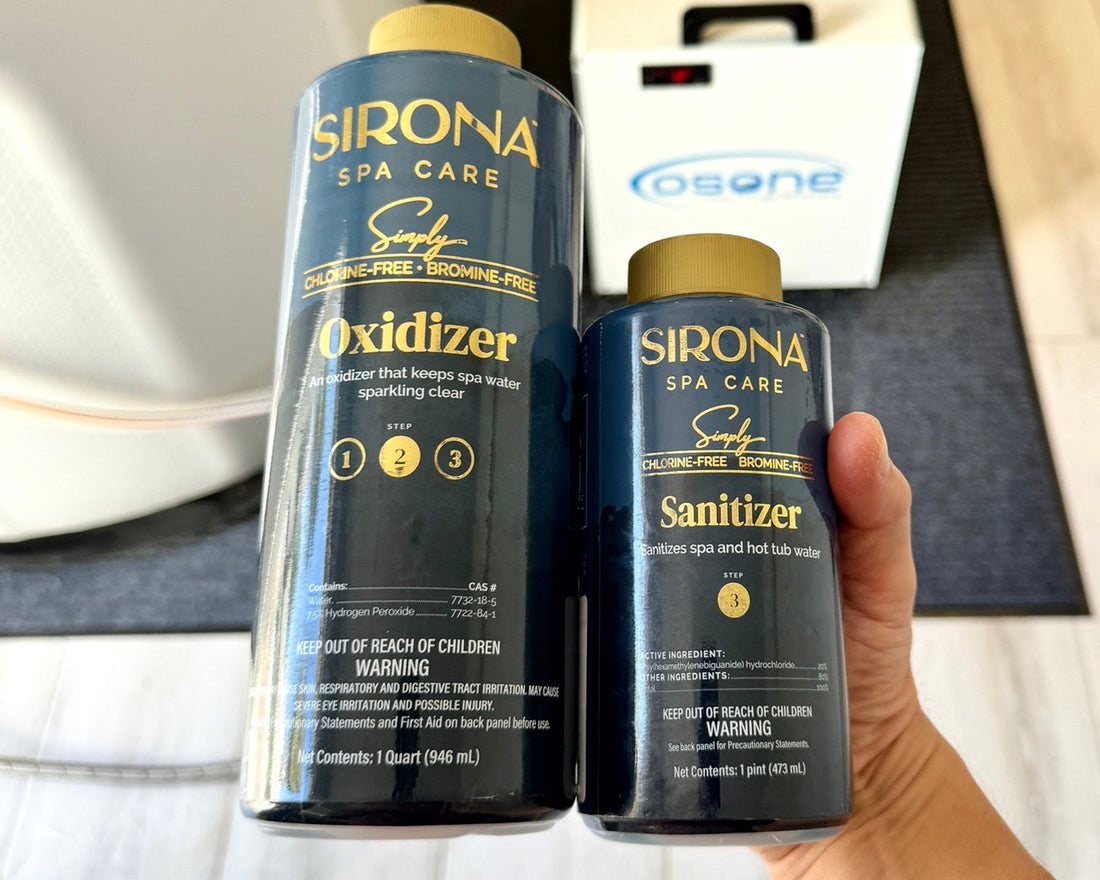
Those who prefer adding solutions highlight the practical advantages. Preservatives and antimicrobial agents can prevent bacterial growth, ensuring the water remains clean, clear and safe for recurring plunges and multiple users over time. With solutions such as Sirona oxidizers and sanitizers, the need to drain and replace water can be significantly reduced. This may be beneficial for those who prefer convenience or with cold plunge setups that cannot be frequently drained (e.g. a high rise condo or where an outflow drain may not easily be accessible). It should be noted that additives can only be used where there is continuous water flow via a chiller. If you are using ice in stagnant water, the solutions will not perform as desired.
